
What is the SIE exam?
A plain-English guide to the Securities Industry Essentials exam: who it is for, what it tests, what it costs, and how to use it as the first step toward a securities career.
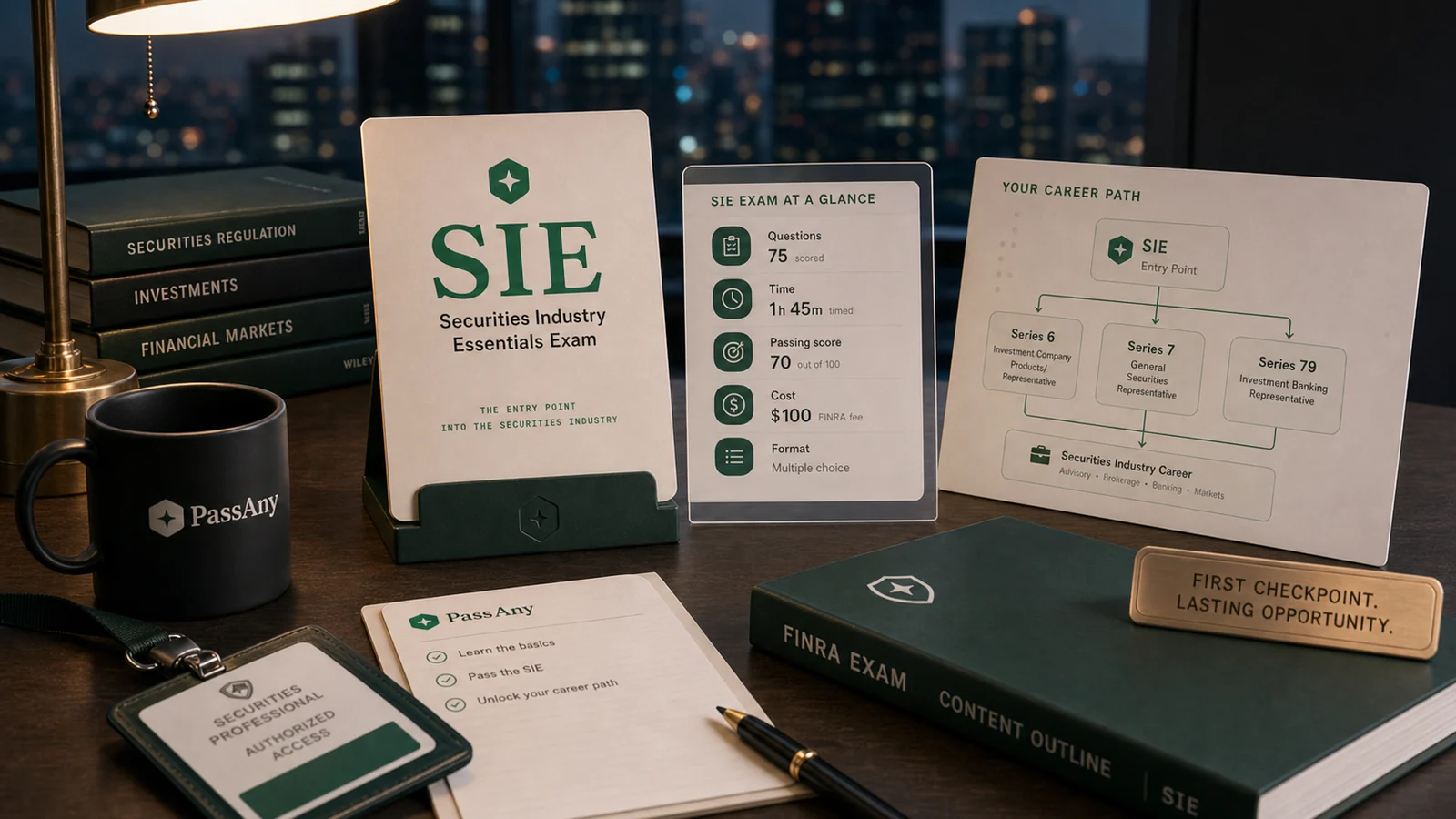
The SIE is FINRA's entry-level securities exam. Anyone 18 or older can take it without a broker-dealer sponsor. The exam costs $100, has 75 scored questions, gives you 1 hour and 45 minutes, and uses 70 as the passing score. A passing result is valid for four years.
What candidates usually need to know first
The SIE is simple to describe, but candidates get stuck when they do not understand what the exam does and does not let them do.
It proves industry basics, not full registration.
Passing the SIE alone does not let you sell securities. It pairs with a representative-level exam such as Series 7 after firm sponsorship.
The exam is broad by design.
Expect products, risks, accounts, trading rules, prohibited activities, and regulatory basics rather than one narrow finance topic.
Use it before or during hiring.
Because no sponsor is required, candidates can pass it before applying, then complete a top-off exam after joining a member firm.
Turn the guide into practice.
Reading helps, but the SIE is passed by applying the rule in mixed questions, reviewing misses, and checking timing before the appointment.
How to think about SIE prep
The exam is not hard because of advanced math. It is hard because many terms sound familiar and many products share overlapping risks. A good prep system should show the official outline, explain wrong answers, and keep weak domains visible.
Use this checklist
- Use the 16/44/31/9 content outline to decide study time.
- Practice questions by topic before relying on full mocks.
- Review missed questions until the rule, not just the answer, is clear.
- Use flashcards for definitions, limits, formulas, and look-alike terms.
What is the SIE questions
What is the SIE exam?
Do I need a sponsor to take the SIE?
What score do I need to pass the SIE?
What happens after passing the SIE?
Keep moving through the SIE path.
Prepare for the SIE with a plan, not random review.
Start with free practice, then use explanations, flashcards, mock exams and a daily study plan to close weak domains.