
SIE flashcards that flip to a full explanation.
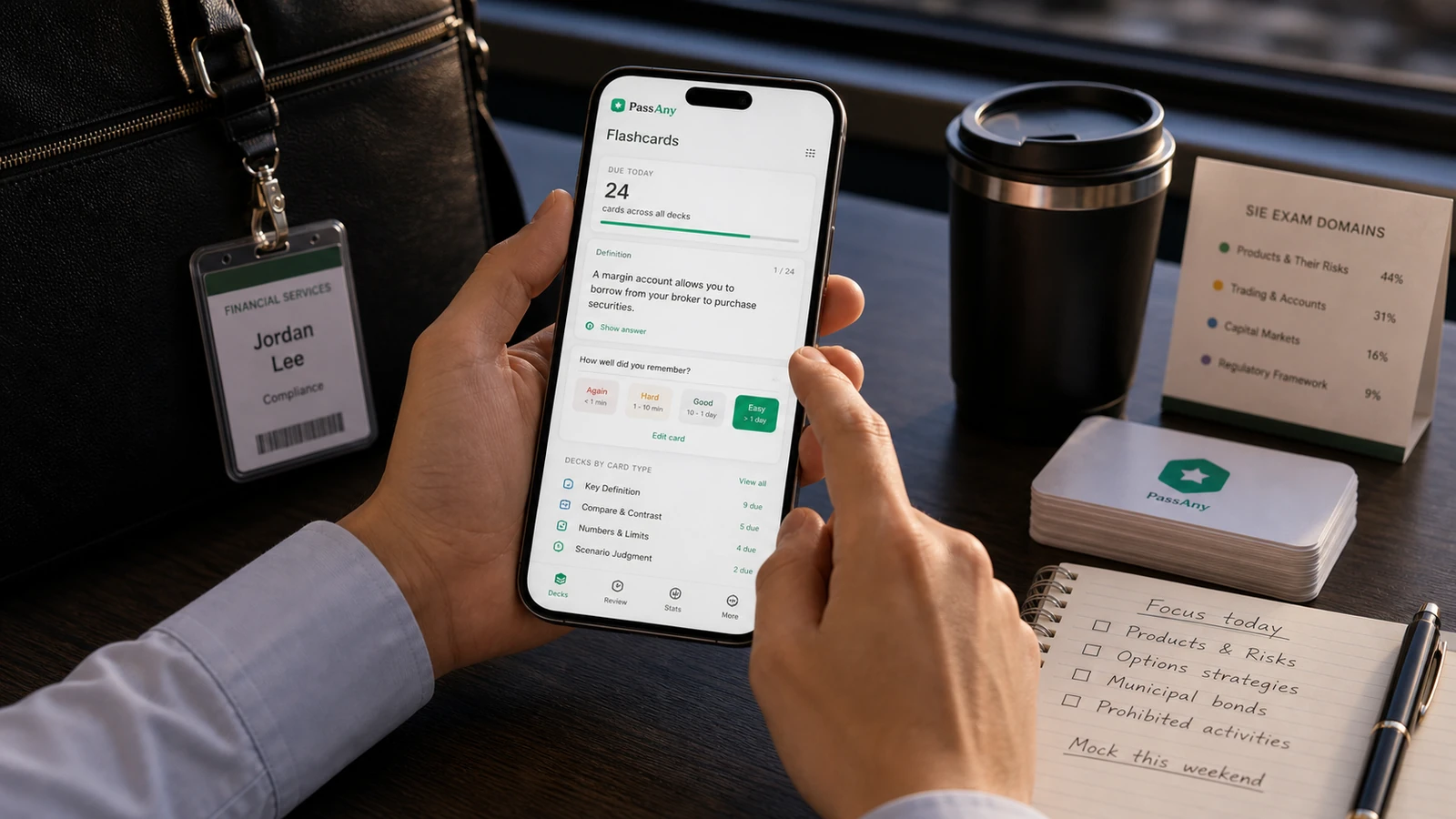
Not a word list. Each card is a real SIE-style question that flips to the reasoning behind it — and spaced repetition brings it back right before you'd forget it.
Some points are lost because the fact almost came back.
Flashcards aren't a replacement for practice — they're the memory layer that keeps small rules ready the moment a question needs them.
You need clean recall for the terms the exam asks point-blank.
Definitions and product features become quick review cards instead of long re-reading sessions.
Limits, deadlines and formulas disappear unless they come back.
Spaced review returns the rule before memory fades, and keeps hard cards coming back sooner.
Similar products and rules need contrast, not repetition alone.
Compare-and-contrast cards put two confusable ideas side by side so they finally separate.
Eight decks, each trains a different exam skill.
Cards span the four FINRA domains, sorted by the kind of thinking the SIE tests — not just "definitions." Each deck has its own cover and its own due queue.


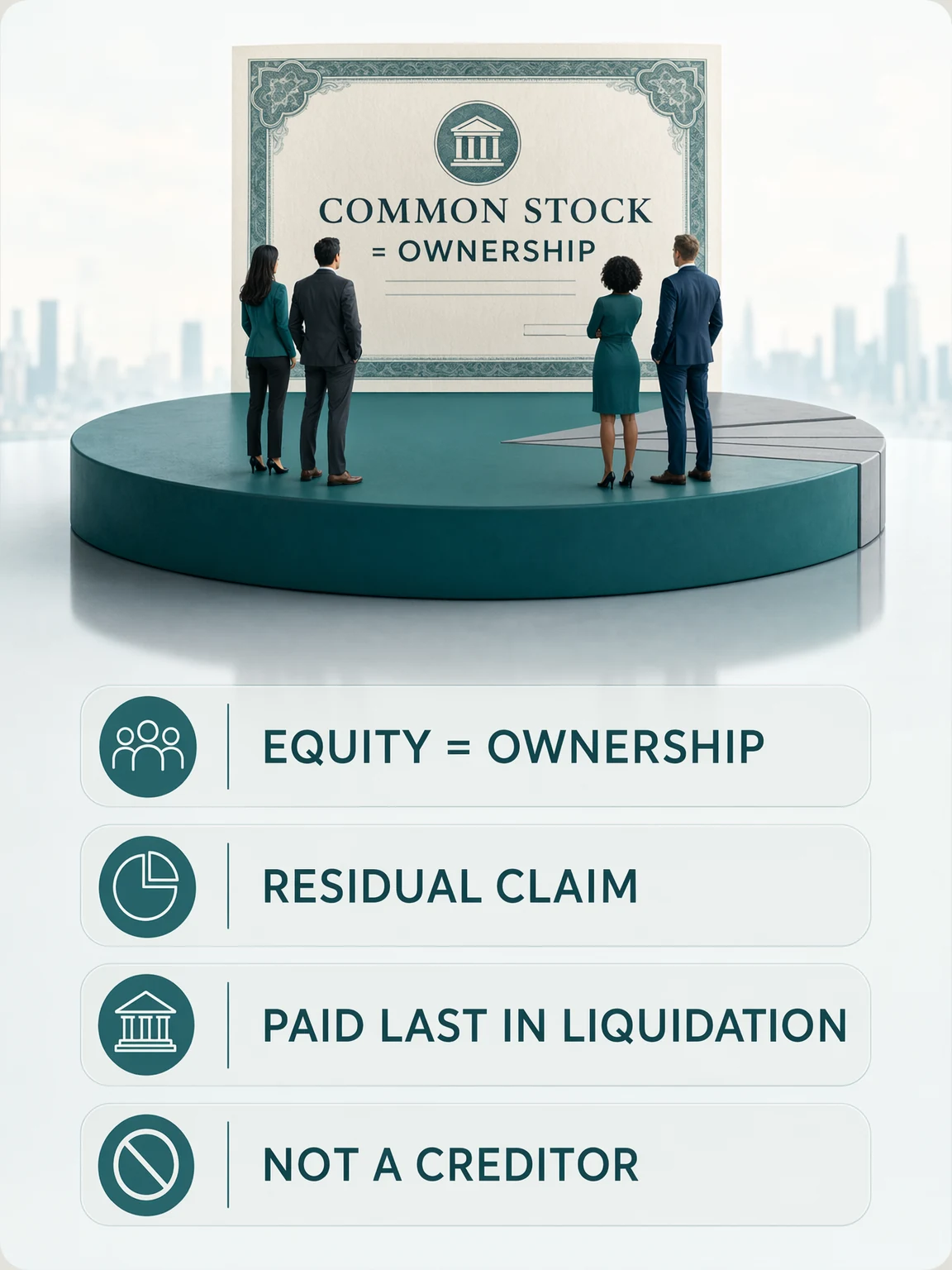
Every card flips to the full reasoning — not just the answer.
The front is a real SIE-style question with four self-test options. Flip it and the back doesn't just say "C" — it explains the whole card:
- The answer — and what your pick told you
- Core idea — the concept the card is really about
- Exam focus — exactly how the SIE tests it
- Memory hook — a sticky way to keep it
- Quick self-check — a recall question to prove it stuck
- Source — the FINRA outline or SEC rule it comes from

You rate each card. It schedules the next review.
A "Due today" count keeps every session small. After you flip, you rate how it felt — and the card comes back on the right day, with the hard ones returning sooner.
Overdue cards come back first, and the queue is reshuffled each session so you learn the fact, not the order.
Card art you can actually keep
Each card is illustrated front and back, so a rule isn't a wall of text — it's an image your memory can grab. Tap any card to open it full-size and download it for offline review.
- Illustrated front (question) and back (explanation)
- Tap to enlarge and download the card
- Built from the same SIE content as your practice questions
Strongest paired with practice
When a practice or mock question exposes a fuzzy rule, the matching deck keeps it warm until exam day. Memory plus application beats either one alone.
SIE flashcard questions
What makes PrepScore's SIE flashcards different?
How does the spaced repetition work?
What are the 8 SIE flashcard types?
Should I only use flashcards for the SIE?
Keep every rule warm until exam day.
Start with free SIE practice, then let the decks bring back what you're about to forget.