
What is the SIE exam pass rate?
Pass-rate searches are popular, but the number is less useful than candidates think. FINRA does not publish an ongoing official pass-rate table for the SIE.
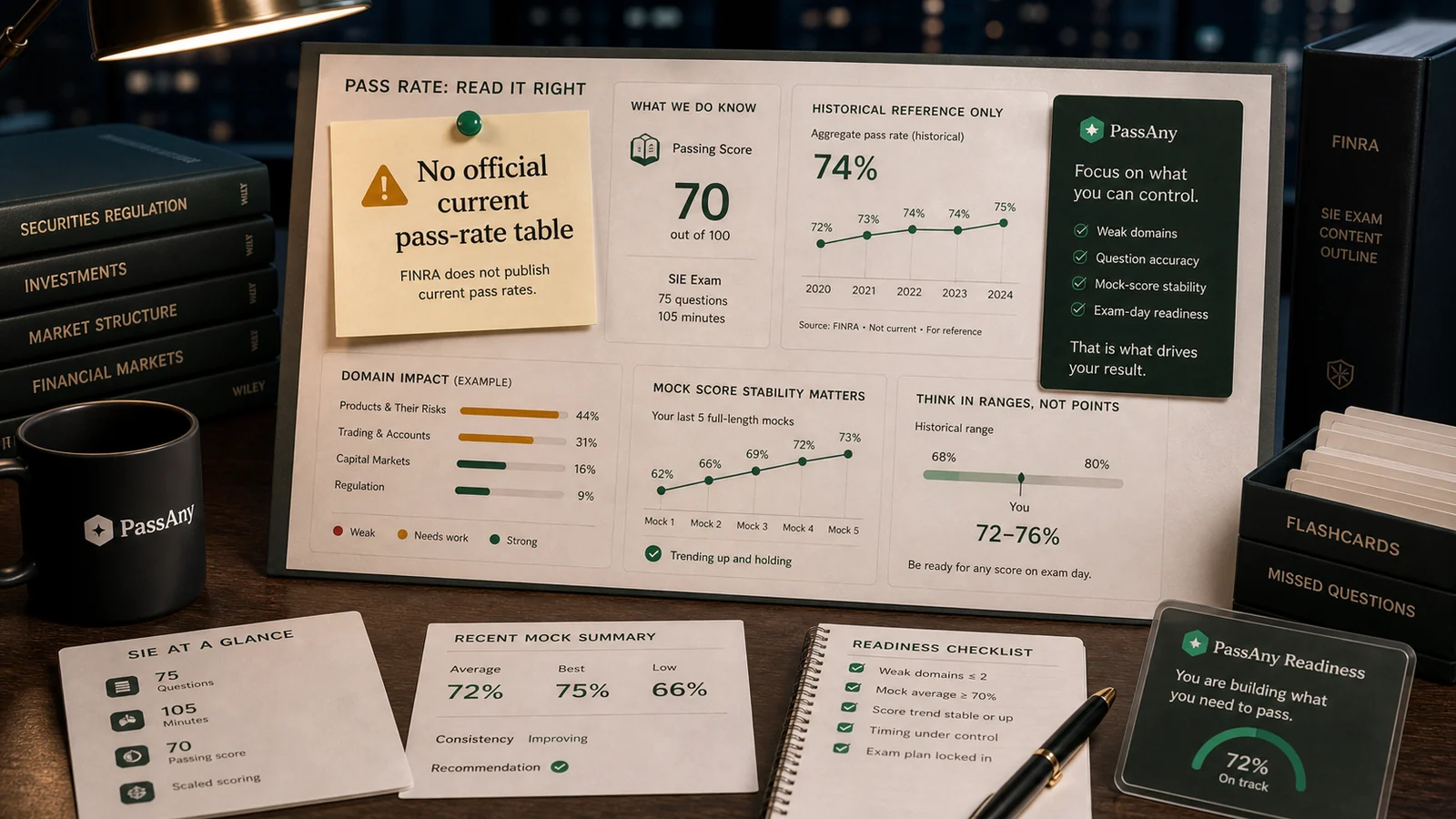
FINRA publishes the passing score as 70, but it does not maintain a simple public, ongoing official SIE pass-rate table. A commonly cited historical figure is about 74% first-time pass rate from 2019 reporting; treat it as dated context, not a current guarantee.
How to use pass-rate data without fooling yourself
A broad average cannot tell you whether your Products and Risks score, timing, or repeated misses are safe.
Pass rate is about other people.
It can show that the exam is passable, but not whether your own weak domains are ready.
70 is the score rule.
Your goal should be stable margin above the line, not one lucky mock at 70.
Your mock trend is better data.
Domain breakdown, pacing, and repeated misses are more actionable than a historical average.
Turn the guide into practice.
Reading helps, but the SIE is passed by applying the rule in mixed questions, reviewing misses, and checking timing before the appointment.
What to track instead of obsessing over pass rate
Use public pass-rate context only to set expectations. For your own exam, watch leading indicators: domain scores, missed-question repeats, flashcard backlog, and timed mock trend.
Use this checklist
- Score margin: repeated mocks comfortably above the passing line.
- Domain balance: no major blind spot in the 44% Products and Risks section.
- Timing: enough time to finish without rushing final questions.
- Review payoff: old mistakes stop reappearing in new sets.
Pass rate questions
Does FINRA publish the SIE pass rate?
What is the commonly cited SIE pass rate?
What score do I need to pass the SIE?
Should I rely on pass-rate averages?
Keep moving through the SIE path.
Prepare for the SIE with a plan, not random review.
Start with free practice, then use explanations, flashcards, mock exams and a daily study plan to close weak domains.